
This post contains Amazon Associate affiliate links. As an Amazon Associate, Got the Eats earns from qualifying purchases at no extra cost to you.
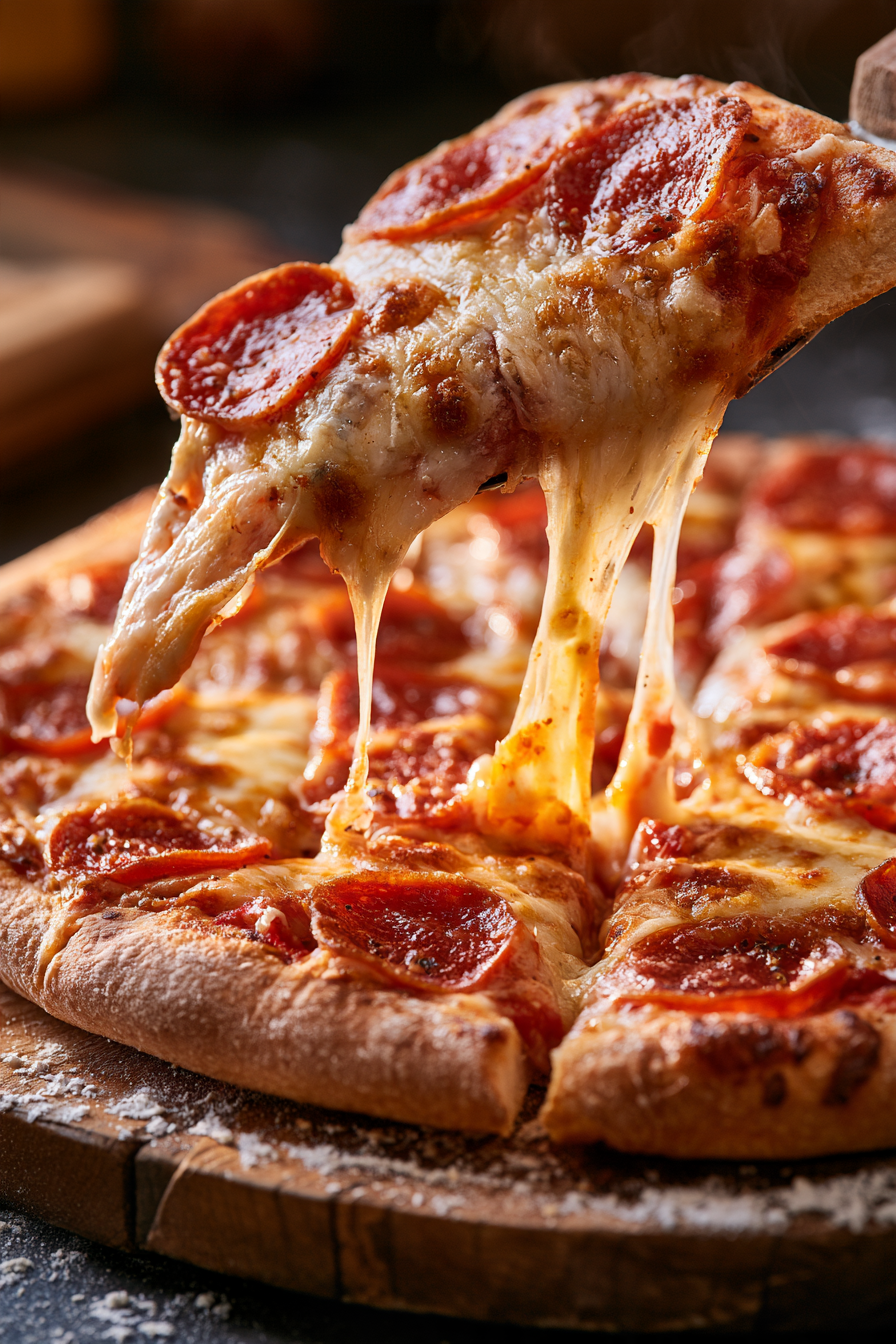
Two ingredients, no yeast, no rising time. If that sounds too good to be true for pizza dough, you haven’t seen the Greek yogurt pizza videos taking over your feed. Stir self-rising flour into thick Greek yogurt, knead for a minute, and you have a chewy, golden crust ready for the oven in under 10 minutes. Add part-skim mozzarella and turkey pepperoni and a half-pizza serving is packed with protein.
Most versions online end up pale, dense, and gummy in the middle. This one fixes that with three small upgrades: a hot pizza stone (or an upside-down baking sheet), a quick par-bake before the toppings go on, and a thin brush of olive oil on the crust edge so it browns like a real pizzeria crust.
Prep: 15 min · Cook: 18 min · Total: 33 min · Makes: one 12-inch pizza (2 servings) · Protein: High
Why this recipe works
Greek yogurt handles two jobs that normally take yeast and time. Its acidity reacts with the baking powder already in self-rising flour, giving the dough lift in the oven with no proofing. And because strained Greek yogurt is so thick and protein-dense, it adds structure and gives the crust a real protein boost compared with a regular flour-and-water dough.
What made it go viral is that it’s a real pizza, not a “pizza-inspired” bowl or a cauliflower crust you eat with a fork. You can pick it up, fold it, and get a chewy bite with crisp edges, and the recipe is so short that anyone can remember it after watching a 30-second video once.
Ingredients
Everything below makes one 12-inch pizza, which serves two as a main. Double it for two pizzas or a sheet-pan pizza.
Protein dough
- 1 cup / 125g self-rising flour, plus extra for dusting
- 1 cup / 225g plain nonfat Greek yogurt (thick, strained style)
- ¼ tsp garlic powder (optional)
- 1 tsp extra virgin olive oil, for brushing the crust
Sauce & toppings
- ½ cup / 125g pizza sauce or marinara
- 1 cup / 112g shredded part-skim mozzarella
- 1 oz / 30g turkey pepperoni (about 17 slices)
- 2 tbsp grated Parmesan
- ½ tsp Italian seasoning
- Crushed red pepper flakes and hot honey, for serving (optional)
- Fresh basil leaves (optional)
Equipment
- Pizza stone or pizza steel (or an upside-down rimmed baking sheet)
- Pizza peel (optional, makes transferring easier)
- Mixing bowl
- Silicone spatula
- Digital kitchen scale
- Rolling pin
- Parchment paper
- Pastry brush
- Pizza cutter
Step-by-step instructions
1. Preheat the oven and stone (at least 30 min ahead)
Put a pizza stone, pizza steel, or upside-down baking sheet on the middle rack and preheat the oven to 450°F (230°C). A properly hot surface is what gives the bottom crust color and crispness, so give it time to heat through. Use the preheat time to make the dough.
2. Mix the dough (3 min)
In a mixing bowl, stir together the self-rising flour and garlic powder. Add the Greek yogurt and stir with a silicone spatula until a shaggy dough forms and most of the flour is absorbed.
3. Knead and rest (7 min)
Turn the dough out onto a well-floured surface and knead for 1–2 minutes, adding flour a teaspoon at a time, until it’s smooth and only slightly tacky. Cover it with the upturned bowl and let it rest for 5 minutes. The rest relaxes the gluten, so the dough rolls out without springing back.
4. Shape the crust (3 min)
Place the dough on a sheet of parchment and roll or press it into a 12-inch round about ¼ inch thick, leaving the edge slightly thicker for a crust. Brush the outer edge with olive oil and prick the center a few times with a fork to stop big bubbles.
5. Par-bake the crust (6 min)
Slide the crust, still on the parchment, onto the hot stone. Bake for 6 minutes, until the surface looks dry and set but not yet browned. This step is what keeps the center from turning gummy under the sauce.
6. Top and finish baking (10–12 min)
Pull the crust out and spread the sauce over it, leaving a ½-inch border. Top with mozzarella, pepperoni, Parmesan, and Italian seasoning. Return it to the oven and bake 10–12 minutes, until the cheese is bubbling with golden spots and the crust edge is deep golden brown.
7. Rest, slice, and serve (2 min)
Let the pizza rest for 2 minutes so the cheese sets, then slice with a pizza cutter. Finish with fresh basil, red pepper flakes, and a drizzle of hot honey if you want that sweet-heat combo.
Chef’s tip: The type of yogurt makes or breaks this dough. Use a thick, strained Greek yogurt, not regular or “Greek-style” yogurt. If your dough is too sticky to handle even after adding extra flour, the yogurt is too thin. Strain it in a paper towel-lined sieve for 15 minutes next time.
Variations
| Want to… | Do this |
|---|---|
| Push the protein higher | Replace ¼ cup of the flour with unflavored whey or egg white protein powder, and add shredded rotisserie chicken or grilled chicken sausage as a topping. |
| Make a cottage cheese base | Swap the pizza sauce for ½ cup blended cottage cheese mixed with garlic and Parmesan for a creamy white pizza with even more protein. |
| Go gluten-free | Use a 1:1 gluten-free flour blend plus 1½ tsp baking powder and ¼ tsp salt, and add 1–2 extra tbsp yogurt if the dough feels dry. |
| No self-rising flour? | Whisk 1 cup (125g) all-purpose flour with 1½ tsp baking powder and ¼ tsp salt. It works exactly the same. |
| Make it in the air fryer | Shape into two 7-inch personal pizzas. Air fry the crusts at 375°F for 5 minutes, flip, top, and cook another 4–5 minutes. |
| Make it vegetarian | Skip the pepperoni and load up on mushrooms, bell peppers, red onion, and olives. Add an extra ¼ cup mozzarella to keep the protein up. |
Storage & reheating
Store leftover slices in an airtight container in the fridge for up to 3 days. For the crispiest reheat, warm slices in a dry skillet over medium heat for 3–4 minutes with a lid on to melt the cheese, or air fry at 350°F for 3–4 minutes. Avoid the microwave, which makes the yogurt crust chewy. You can also make the dough up to 24 hours ahead. Wrap it tightly and refrigerate, then let it sit at room temperature for 15 minutes before rolling.
Nutrition
Greek yogurt, mozzarella, and turkey pepperoni make this a protein-rich pizza night. Exact nutrition depends on your brands and portions, so check your labels if you’re tracking.
Frequently asked questions
Can you taste the Greek yogurt in the crust?
Barely. Baked, the yogurt gives the crust a very mild tang, similar to sourdough, that most people don’t notice under the sauce and cheese. Garlic powder in the dough and an olive oil-brushed edge make it taste even more like classic pizza crust.
How much protein is in Greek yogurt pizza?
It’s a high-protein pizza, but the exact amount varies with the yogurt, cheese, and toppings you use. The Greek yogurt crust, mozzarella, and turkey pepperoni all contribute.
Why is my Greek yogurt pizza dough so sticky?
Sticky dough usually means the yogurt is too thin or the flour was measured light. Use a thick, strained Greek yogurt, weigh your flour, and knead in extra flour a teaspoon at a time until the dough is only slightly tacky. Floured hands help too.
Do I need to par-bake the crust?
Yes, for the best texture. Baking the crust for about 6 minutes before adding sauce sets the surface so it doesn’t absorb moisture and turn gummy. Skipping it works in a pinch, but the center will be softer and paler.
Can I use regular flour instead of self-rising flour?
Yes. Mix 1 cup (125g) all-purpose flour with 1½ teaspoons baking powder and ¼ teaspoon salt, and use it exactly as you would self-rising flour. Without the baking powder, the crust will be dense and flat.
Can I freeze Greek yogurt pizza dough?
Yes. Wrap the dough ball tightly in plastic wrap and freeze it for up to 2 months. Thaw it overnight in the fridge, then let it sit at room temperature for 15 minutes before rolling. You can also freeze par-baked crusts and top them straight from frozen.
#proteinpizza #greekyogurtdough #highprotein #viralrecipe #2ingredientdough